传动涂装线是支撑自动化连续作业的核心设施,其耐高低温涂层直接决定了线体在极端温度环境下的服役寿命与运行稳定性,施工过程需严格管控各环节,确保涂层性能达标。以下为核心施工要点:
The transmission coating line is the core facility supporting automated continuous operations, and its high and low temperature resistant coating directly determines the service life and operational stability of the line body in extreme temperature environments. The construction process requires strict control of each link to ensure that the coating performance meets the standards. The following are the core construction points:
其一,基材预处理是涂层性能的基础保障。传动线工件多为钢铁或铝合金基材,预处理需依次完成除油、除锈、氧化层清除及表面调整工序:采用碱洗+高压喷淋的组合工艺去除工件表面的润滑油、冲压油污,油污残留量需控制在10mg/m?以内;除锈需采用喷砂或抛丸处理,表面粗糙度维持在25~50μm,增强涂层机械啮合附着力;针对铝合金基材,还需增加磷化或钝化处理,消除表面自然氧化层,避免高低温循环下氧化层与涂层剥离。预处理后需及时检测表面电导率,合格工件应避免二次污染。
Firstly, substrate pretreatment is the fundamental guarantee for coating performance. The workpieces of the transmission line are mostly made of steel or aluminum alloy substrates. Pre treatment requires the sequential completion of oil removal, rust removal, oxide layer removal, and surface adjustment processes: a combination of alkali washing and high-pressure spraying is used to remove lubricating oil and stamping oil stains on the surface of the workpiece, and the residual amount of oil stains needs to be controlled at 10mg/m? Within; Rust removal requires sandblasting or shot blasting treatment, with a surface roughness maintained at 25-50 μ m to enhance the mechanical adhesion of the coating; For aluminum alloy substrates, it is necessary to add phosphating or passivation treatment to eliminate the natural oxide layer on the surface and prevent the oxide layer from peeling off from the coating under high and low temperature cycling. After pre-treatment, surface conductivity should be tested in a timely manner, and qualified workpieces should avoid secondary pollution.
其二,涂料选型与配比需匹配工况需求。耐高低温涂层需根据线体长期服役温度范围、温度波动幅度选型,主流适配方案为改性有机硅涂层(适配-60℃~250℃)或氟碳改性环氧涂层(适配-40℃~200℃),严禁选用普通醇酸、硝基等不耐高低温的涂料。双组分涂料需严格按说明书配比主剂、固化剂与稀释剂,配比偏差不得超过±5%,混合后需在适用期内(通常为1~2h)用完,避免凝胶失效;稀释剂需选用配套型号,错用会导致涂层失光、附着力下降。
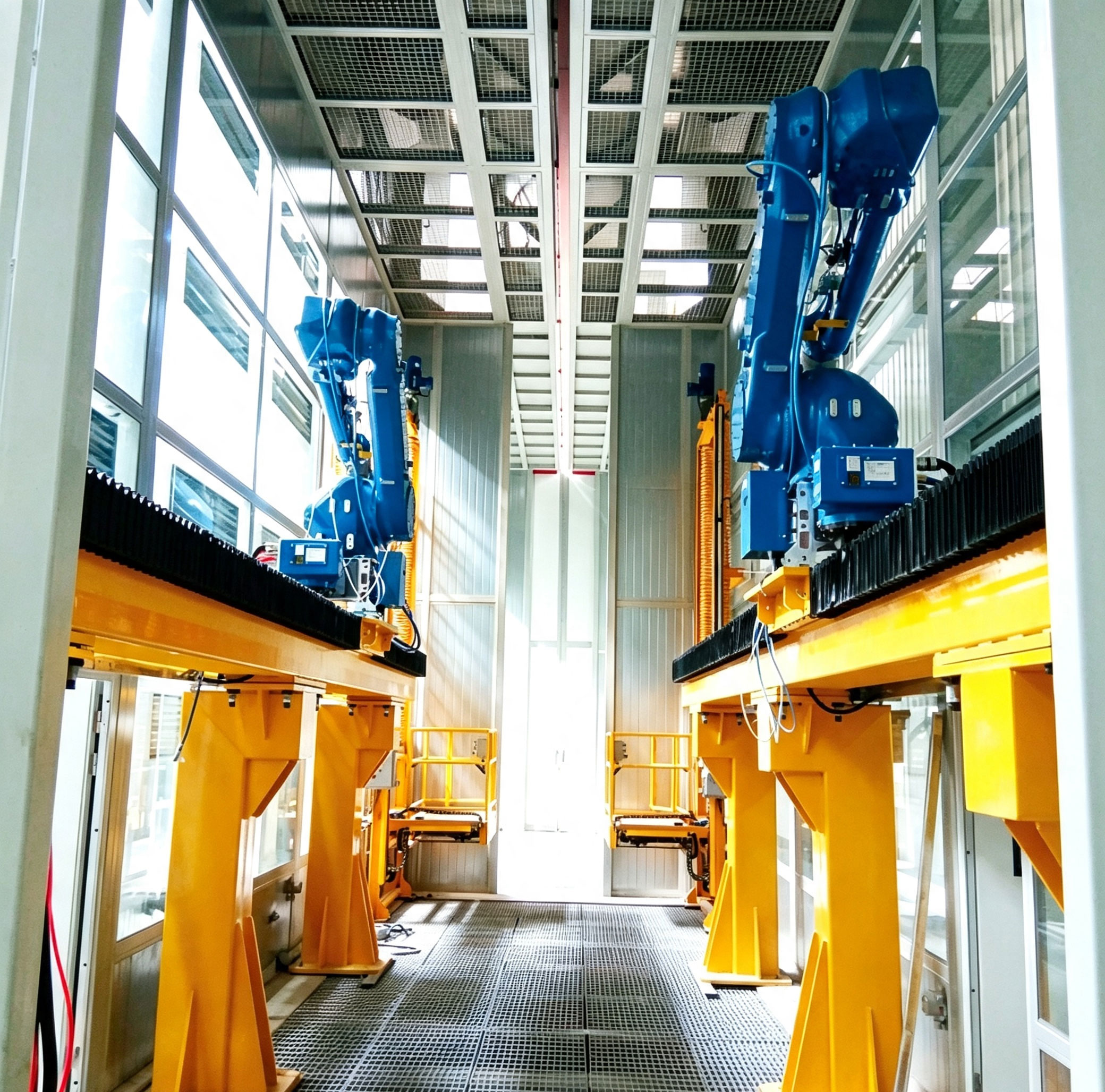
Secondly, the selection and proportioning of coatings should match the requirements of the working conditions. The selection of high and low temperature resistant coatings should be based on the long-term service temperature range and temperature fluctuation amplitude of the line. The mainstream adaptation options are modified silicone coatings (suitable for -60 ℃~250 ℃) or fluorocarbon modified epoxy coatings (suitable for -40 ℃~200 ℃). It is strictly prohibited to use coatings such as ordinary alkyd and nitro that are not resistant to high and low temperatures. The two-component coating shall be mixed with the main agent, curing agent and diluent in strict accordance with the instructions, and the ratio deviation shall not exceed ± 5%. After mixing, it shall be used up within the applicable period (usually 1~2h) to avoid gel failure; Diluents should be selected with matching models, as improper use can cause coating loss of gloss and decreased adhesion.
其三,施工环境需满足工艺要求。施工环境温度控制在15℃~30℃,相对湿度≤80%,风速≤3m/s,严禁在雨天、雾天或温差超过10℃的时段作业:低湿度可避免涂层凝结水汽起泡,适宜风速可防止灰尘附着未干涂层;冬季施工时,需对施工区域加热至18℃以上,加速涂层成膜,避免低温导致固化不完全;高温环境需通风降温,防止稀释剂快速挥发引发针孔。
Thirdly, the construction environment must meet the process requirements. The temperature of the construction environment should be controlled between 15 ℃ and 30 ℃, with a relative humidity of ≤ 80% and a wind speed of ≤ 3m/s. It is strictly prohibited to work in rainy, foggy, or time periods with a temperature difference exceeding 10 ℃. Low humidity can prevent coating condensation, water vapor bubbles, and suitable wind speed can prevent dust from adhering to the wet coating; During winter construction, the construction area should be heated to above 18 ℃ to accelerate coating film formation and avoid incomplete curing caused by low temperatures; Ventilation and cooling are required in high temperature environments to prevent rapid evaporation of diluents that may cause pinholes.
其四,喷涂工艺参数需精准控制。传动线多采用自动化喷涂,喷枪压力维持在0.3~0.5MPa,枪口与工件距离保持20~30cm,移动速度均匀(约0.5m/s),避免过喷或漏喷;每层干膜厚度控制在20~30μm,总厚度达到80~120μm,确保耐高低温防护性;复杂结构件(如导轨凹槽、传动齿轮缝隙)需人工补喷,杜绝漏喷死角。涂层层间间隔按表干时间把控(通常20~30min),前一层未表干不可喷后一层,防止流挂。
Fourthly, the spraying process parameters need to be precisely controlled. Automatic spraying is commonly used for transmission lines, with the spray gun pressure maintained at 0.3~0.5MPa and the distance between the muzzle and the workpiece kept at 20~30cm. The movement speed is uniform (about 0.5m/s) to avoid overspray or missed spraying; The dry film thickness of each layer is controlled at 20-30 μ m, and the total thickness reaches 80-120 μ m to ensure high and low temperature resistance and protection; Complex structural components (such as guide rail grooves and transmission gear gaps) need to be manually sprayed to prevent blind spots from being missed. The interval between coating layers should be controlled according to the surface drying time (usually 20-30 minutes), and the previous layer should not be sprayed before surface drying to prevent sagging.
其五,固化工艺管控是性能落地的关键。烘烤固化型涂层需严格遵循升温曲线:升温速率≤5℃/min,避免温差过大导致涂层内部应力开裂;固化温度与时间符合涂料要求(如120℃烘烤30min),炉内各区域温度偏差≤±5℃,确保所有工件涂层固化均匀;固化完成后自然降温至室温,严禁直接接触冷水或低温环境,避免骤冷引发涂层剥落。
Fifthly, the control of curing process is the key to achieving performance. Baking curing coatings must strictly follow the heating curve: heating rate ≤ 5 ℃/min, to avoid excessive temperature differences that may cause stress cracking inside the coating; The curing temperature and time meet the requirements of the coating (such as baking at 120 ℃ for 30 minutes), and the temperature deviation in each area of the furnace is ≤± 5 ℃ to ensure uniform curing of all workpiece coatings; After curing, naturally cool down to room temperature. It is strictly prohibited to directly contact cold water or low-temperature environments to avoid coating peeling caused by sudden cooling.
其六,完工后质量检验需全面覆盖。施工后逐一检查外观,无流挂、针孔、漏喷缺陷;采用干膜测厚仪抽检,厚度合格率≥90%;附着力测试采用划格法,达标等级为0~1级;重点抽检耐高低温循环性能,经-40℃~150℃、10次循环后无开裂、脱落,方可投入使用。
Sixth, the quality inspection after completion should be fully covered. Inspect the appearance one by one after construction, and ensure that there are no defects such as sagging, pinholes, or missed spraying; Using a dry film thickness gauge for sampling inspection, with a thickness qualification rate of ≥ 90%; The adhesion test adopts the grid cut method, with a compliance level of 0~1; Key spot checks should be conducted on the resistance to high and low temperature cycling. Only after 10 cycles at -40 ℃~150 ℃ without cracking or detachment, can it be put into use.
本文由RTO废气处理设备友情奉献.更多有关的知识请点击:http://www.sdcjtz.com真诚的态度.为您提供为全面的服务.更多有关的知识我们将会陆续向大家奉献.敬请期待.
This article is a friendly contribution from RTO waste gas treatment equipment For more information, please click: http://www.sdcjtz.com Sincere attitude To provide you with comprehensive services We will gradually contribute more relevant knowledge to everyone Coming soon.

 : 18563723072
 : sdcjtz@126.com
 : 山东省德州市齐河县经济开发区名嘉西路9号

扫码添加微信了解更多


 公司简介
公司简介 荣誉资质
荣誉资质 合作伙伴
合作伙伴 发展历程
发展历程 公司优势
公司优势 企业环境
企业环境

 服务办事处
服务办事处 创杰动态
创杰动态 行业动态
行业动态
 鲁公网安备 37142502000144号